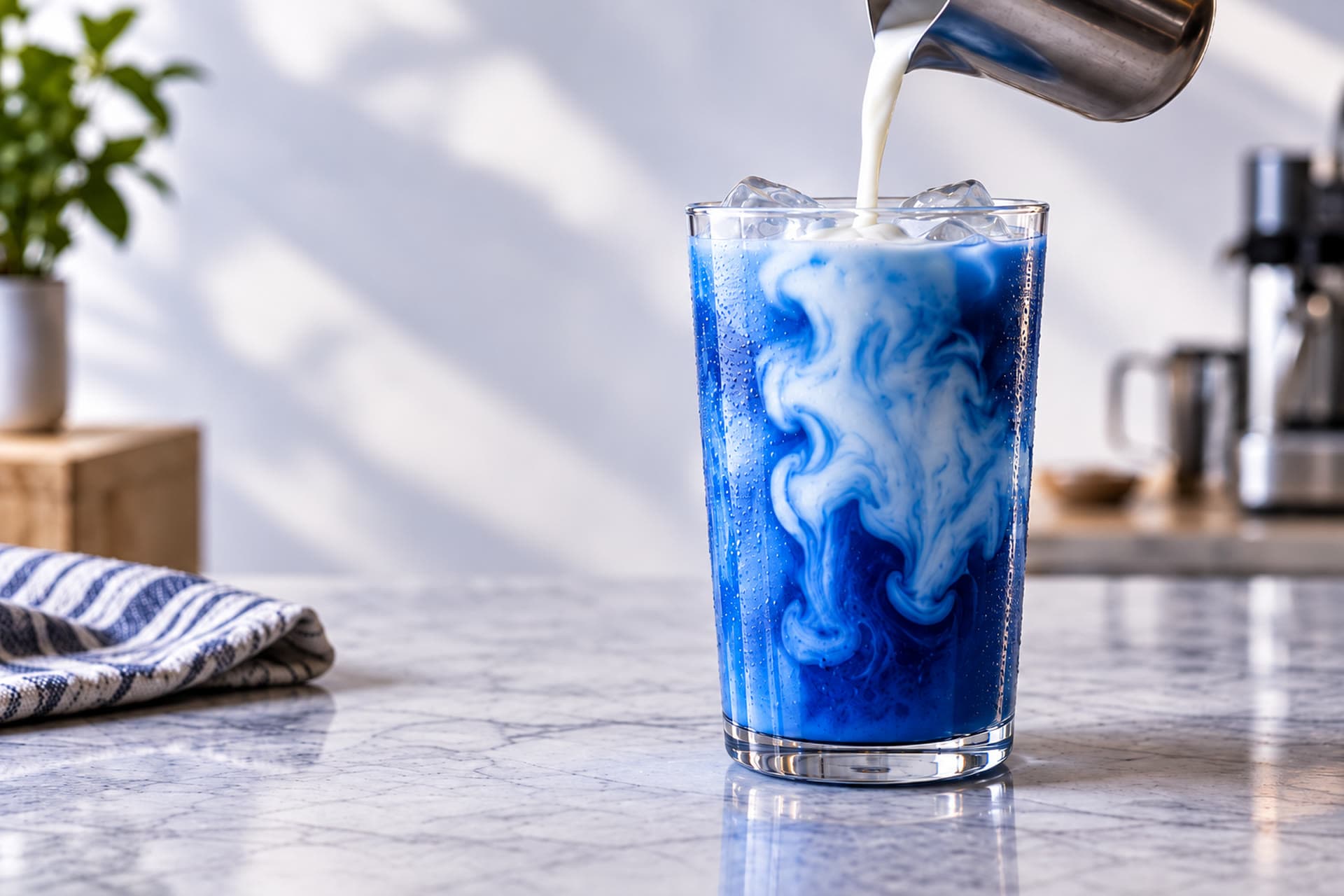
Natural blue food colouring.
A vivid blue for drinks, frosting, glazes, ice cream and desserts, made with phycocyanin from spirulina.
Make it blue.
Blue spirulina gets its colour from phycocyanin, the naturally blue pigment found in spirulina.
Add a little to a pale recipe and you can go from soft sky blue to a deep, electric blue. It works particularly well in drinks, frosting, glazes, ice cream and desserts where the colour has room to show.
PrismaBlu™ Vivid is made for cafés, bars, bakers and small food businesses who want a striking blue without synthetic dye.

Where it works.
Why blue spirulina?
There are easier ways to make food blue.
Synthetic food colours are cheap, strong and predictable. If that is all you need, they do the job extremely well.
Blue spirulina is interesting for a different reason: the colour itself comes from an ingredient worth talking about.
That makes it particularly useful for menu specials, handmade desserts, signature drinks and products where how something gets its colour matters.
And unlike whole green spirulina, blue spirulina is an extract. At normal colouring doses, its flavour is relatively unobtrusive.
Three things to know before you start.
None of this makes blue spirulina difficult to use. It just means the recipe matters.
Start pale.
White, cream, coconut, vanilla and oat bases show blue beautifully. Yellow ingredients pull it greener; dark ingredients mute it.
Go easy on heat.
Phycocyanin does not like prolonged high temperatures. Add it late to syrups, glazes and cooked dessert bases where possible. For baking, it is much happier in frosting, fillings and decoration than inside the oven.
Watch the acid.
Lemon, lime, yogurt and fruit can soften the blue or shift it towards turquoise.
How much do I use?
For drinks, around 1 g per litre is a useful first test.
It is not a magic number. A pale coconut drink may need very little; another recipe may need considerably more.
For frosting, glazes and desserts, work by weight and adjust visually.
Once you find the colour you like, write down the dose. From then on, it is just another ingredient in the recipe.
See the full dosage guideBlue spirulina, butterfly pea or synthetic blue?
They each do something slightly different.
Blue spirulina
Bright blue to cyan, little flavour at normal doses, naturally derived. Sensitive to heat and acidity.
Butterfly pea
Beautiful blue with a more botanical character. Highly sensitive to pH and famous for shifting towards purple with acid.
Synthetic blue
Extremely strong, inexpensive and predictable. The obvious choice when maximum stability and minimum cost matter more than the source of the colour.
If you want a vivid blue and want the colour to come from a naturally derived ingredient, blue spirulina is the interesting one.
A few useful answers.
Will it actually make my recipe bright blue?
In a pale base, yes, often remarkably so. But do not test it in a spoonful of water and assume your recipe will look the same. Put it in the actual drink, frosting or dessert you intend to make.
Does it taste like spirulina?
Not like whole green spirulina. Blue spirulina is a phycocyanin-rich extract rather than whole spirulina biomass. At normal colouring doses its flavour is relatively unobtrusive, although using more will naturally make it more noticeable.
Can I replace blue food dye with it?
Not one-for-one. Synthetic dyes are much more concentrated and stable. Blue spirulina behaves like a natural pigment, so your recipe affects the final colour.
Can I bake with it?
Yes, but the oven is not where it shines. For cakes and pastry, you will usually get a much better blue in buttercream, fillings, glazes, white chocolate and decoration added after baking.
Start with a real recipe.
A 50 g pack is enough for dozens of small trials. Make the drink. Frost the cake. Mix the glaze. Find the shade you want.
Then write down the dose and make it again.